

A brighter intelligence for every learner
Philomi keeps a living understanding of each learner: what they have genuinely shown, what is still unknown, and what should come next.


Education was designed for groups.
Same pace. Same content. Same expectations.
Philomi is designed around one person.
It adapts to who they are, what they need and who they want to become.
- Completion is not mastery
- A score is not understanding
- Unknown is not weak
The system that remembers
One learner. One evolving understanding.
Every observation, piece of project work and assessment attaches to the concepts it shows. The Twin keeps them, so next year's teacher starts from what is known, not from zero.
Learn more
- Project work
- Written work
- Explained aloud
- Teacher observation
The system that understands
From data to understanding.
Philomi connects curriculum, concepts and prerequisites to what each learner has shown. When a prerequisite is missing, the path changes, and the learner, teacher and family can all see why.
Learn more- Place valueSecure
- Fractions as parts of a wholeDeveloping
- Equivalent fractionsNot assessed yet
- Adding fractionsWaiting on a prerequisite
The system that changes how it teaches
Any subject. Any way they learn.
The same idea can arrive on a board, in the hands, as a simulation or inside a project, and the learner can explain it back in their own words. Philomi chooses the form; a chat window is never the default.
Visual One half, two quarters, four eighths: the same length, seen at once.

Hands-on Folded, cut and compared by hand, at school or at home.
Simulation Split a whole again and again, and watch what stays the same.
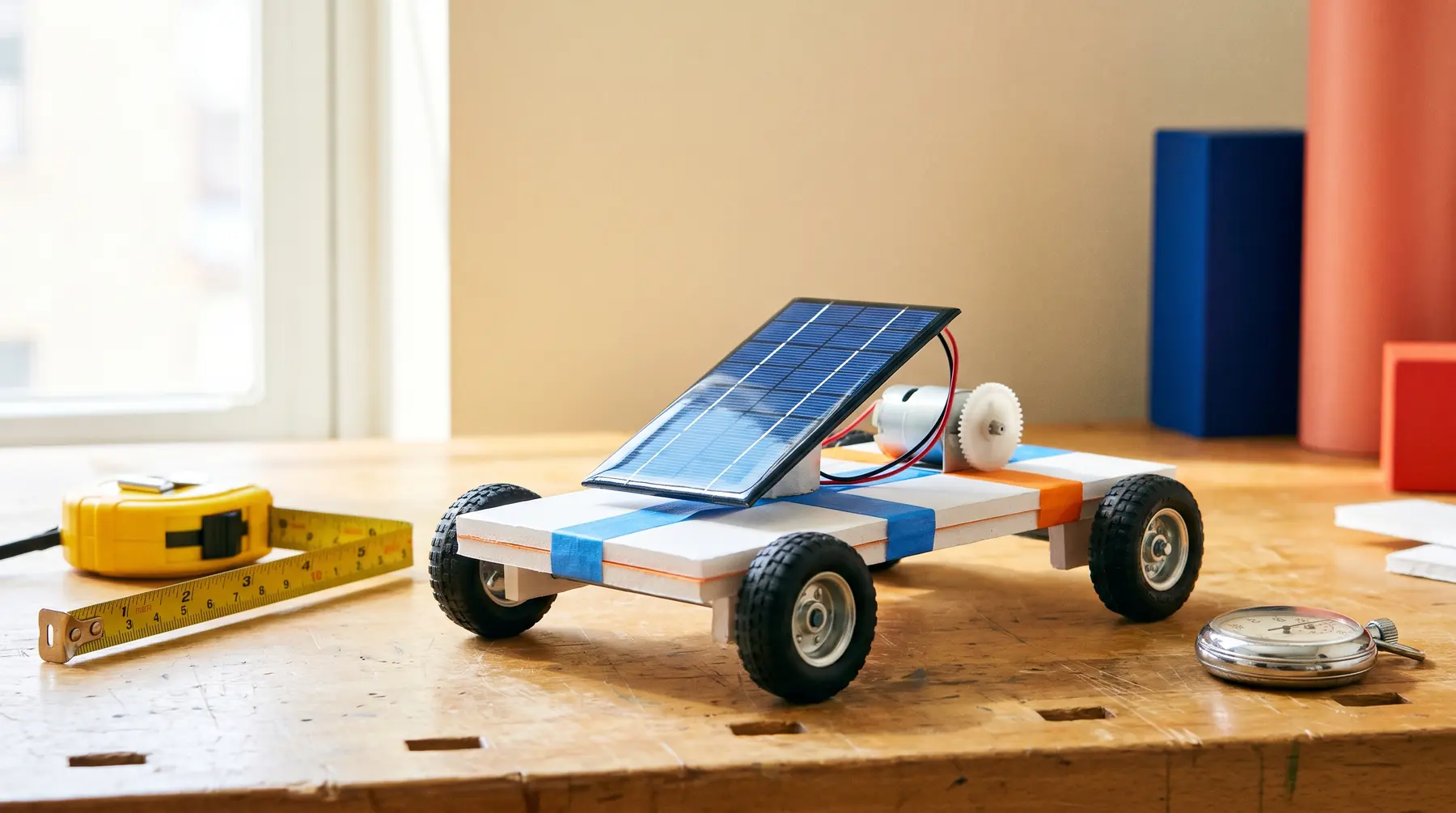
Project Put to work in a real ProjectLab build.
Two quarters cover exactly the same as one half, so they are equal.
Explained aloud Said in the learner's own words, then kept with the work for a person to review.

The Philomi Companion
One companion. Many intelligences behind it.
Learners meet one consistent guide. Behind it is an AI Faculty of 42 specialist agents, each with a defined role, and none of them can create evidence, validate it or change mastery.
Learn more- It never says it missed you or needs you to come back.
- Learners, families and schools decide how present it is.
- Math Teacher
- Science Teacher
- Reading Teacher
- Socratic Tutor
- Research Mentor
- Project Mentor
- Safety Guardian

- Observation
- Question
- Project
- Artifact
- Evidence candidate
Learning does not end at the classroom door
Real life is part of the curriculum.
A solar car built in ProjectLab becomes evidence about energy, measurement and fair testing once a teacher has reviewed it. The same path runs through research, coding, debate, simulations and Life2Learn observations.
Learn moreEvidence instead of assumptions
Mastery moves only on validated evidence.
Work produces evidence candidates. A teacher — or a deterministic check where the answer is unambiguous — validates them. Only validated evidence can change a mastery state, and every state shows the evidence behind it.
Learn more- AI output is never evidence.
- A candidate is not validated evidence.
- A simulation is not real-world validation.
- Curriculum coverage is not mastery.
- Built and tested a solar carProject workValidated by a reviewer
- Explained equivalent fractions aloudExplained aloudEvidence candidate
- Showed the class a fair-test methodTeacher observationWaiting for review
Fractions as parts of a whole
- Not assessed yet
- Emerging
- Developing
- Secure
Growing with the learner
From early curiosity to lifelong learning.
One continuous story. The Companion's presence, the interface and the depth of the work change with age; what the learner has shown carries forward.
Learn more- Early learnerAges 4–7 · Full CompanionPictures, touch and a guide beside every step, with no reading needed.
- ChildAges 8–11 · Side CompanionBeside the work, asking more than telling.
- Young teenAges 12–14 · Minimal MentorA quiet mentor next to projects and research.
- Older teenAges 15–18 · Intelligent MentorA calm copilot for research, argument and career thinking.
- Adult learner18 and over · Intelligent MentorA Mastery Passport of validated skills, each with its evidence, carried forward.


One intelligence layer across the ecosystem
Each person sees what they need to act on — nothing more.
The learner stays at the centre. Families and teachers see the learners they are responsible for; schools, school groups and national programmes see governed aggregates.
Learn moreNo school, class or child is ranked.
- Family
- Teacher
- School
- School group
- National programme
Trust
Privacy, safety and human judgement are architecture — not settings.
No engagement mechanics
No streaks, points, badges or rewards for using the app.
No surveillance
No facial recognition, emotion detection, gaze tracking or behavioural scoring.
People decide
AI drafts and suggests. Teachers, families and school leaders make the decisions.
Only what learning needs
Data is minimised by design, and every access is governed and audited.
Child-safe by design
AI responses pass safety, age and policy checks, with escalation to a person.
Every language, every script
46 interface languages, with right-to-left built in

A more human intelligence for a brighter generation.
Not an LMS. Not an AI tutor. A learning intelligence layer that works alongside the systems you already run.